
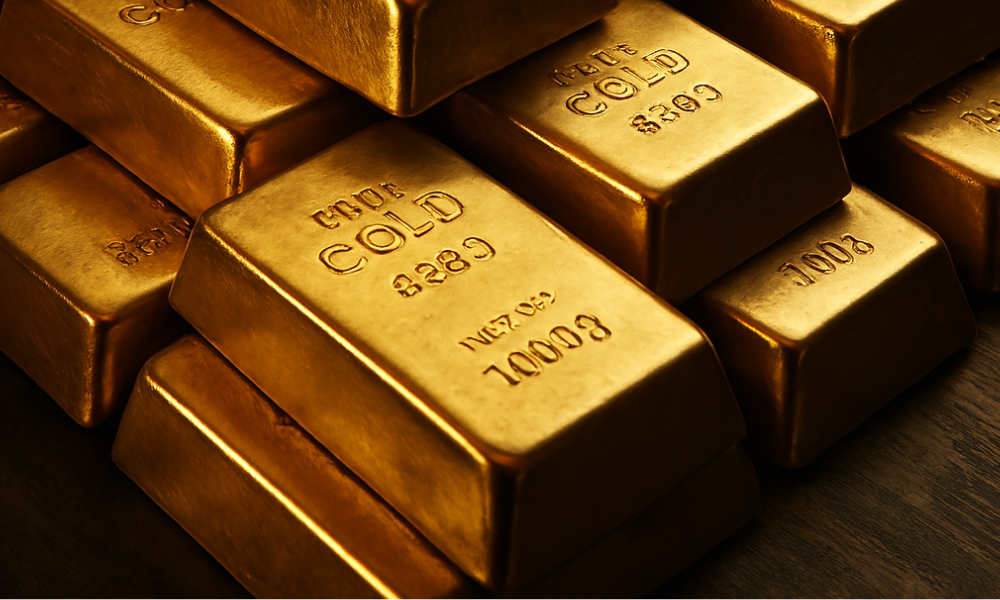
Gold and Silver Reach New Record Highs Amid Global Uncertainty
Precious metals continue their remarkable rally as geopolitical tensions and economic volatility drive investors toward traditional safe-haven assets.
Gold futures for February delivery climbed 1.71% to $4,674.20 per ounce on Monday, building on last week’s record-breaking performance. Spot gold advanced 1.6% to $4,668.14, extending its impressive run in early 2026.
The surge follows President Donald Trump’s announcement of tariffs on goods from eight European nations, contingent on negotiations for “the complete and total purchase of Greenland.” The declaration marks another escalation in the administration’s aggressive pursuit of the Arctic territory.
Strong Fundamentals Support Rally
Market analysts see substance behind the spectacular price movements. “Gold’s rally has been powerful, but it has also been grounded in fundamentals that are still very much in place,” said George Cheveley, natural resources portfolio manager at Ninety One, in the asset manager’s 2026 sectoral outlook released Monday.
“With real rates likely to fall and central banks continuing to diversify their reserves, we see more reason for gold to consolidate or edge higher than to sell off sharply,” Cheveley added. At current price levels, mining margins are projected to reach four to five times their 2024 levels.
Silver Mirrors Gold’s Ascent
Silver matched gold’s upward momentum, with March futures hitting an all-time high of $93.035 per ounce before settling 5.06% higher at $93.02. Spot silver gained 3.55% to trade at $93.16 per ounce, demonstrating similar comfort at elevated price levels.
Both precious metals typically outperform during periods of heightened uncertainty, as investors rotate away from riskier assets like equities in favor of traditional stores of value.
Escalating Geopolitical Tensions
The Greenland tariff announcement represents just one element of a turbulent geopolitical landscape. Earlier this month, U.S. forces captured Venezuelan President Nicolás Maduro and assumed control of the nation’s oil industry. Trump has also suggested imminent military action against Iran amid that country’s suppression of civil protests, though he appeared to moderate his stance last week.
Financial markets reflected the mounting tensions on Monday. European and Asia-Pacific indices mostly declined as investors processed the evolving threats. Shares of major European automakers and luxury goods manufacturers fell sharply Monday morning following news that Trump’s proposed 10% tariffs would take effect February 1, potentially rising to 25% by June 1 without a negotiated settlement.
The Stoxx Europe 600 Automobiles & Parts Index dropped 2.2% in early trading, while the Stoxx Europe Luxury 10 index fell 2.9%. European officials are reportedly considering retaliatory tariffs and broader economic countermeasures.
Domestic Political Uncertainty Adds Pressure
Market volatility may be further amplified by the Justice Department’s criminal investigation of Federal Reserve Chair Jerome Powell. Investors are weighing the long-term implications of the administration’s pressure campaign aimed at forcing interest rate cuts.
Beyond these immediate concerns, the war in Ukraine continues with no resolution in sight, while reconstruction efforts in Gaza are expected to require years of sustained commitment.
Base Metals Ride Different Trends
While precious metals respond to geopolitical factors, other base metals are advancing on structural demand drivers. Copper presents an “attractive” risk-reward profile according to Cheveley, supported by growing demand from energy transition projects and data center infrastructure expansion.
March copper futures traded 0.54% higher at $5.8625 per ounce Monday, though prices remain below their January 6 peak.
As uncertainty persists across multiple fronts, precious metals appear positioned to maintain their role as portfolio hedges against an increasingly unpredictable global landscape.